
Passenger vehicle dispatches from factories to dealers in India fell 8 per cent in January, mainly due to semiconductor shortage, auto industry body SIAM said on Friday. The total passenger vehicle wholesales dropped to 254,287 units in January 2022 as compared to 276,554 units in the same month of last year. Last month, passenger car dispatches stood at 126,693 units as compared to 153,244 units in the year-ago period. Similarly, van dispatches declined to 10,632 units in the period under review from 11,816 units in January 2021.
Driven by strong demand, the overall passenger vehicle dispatches crossed 3.35 lakh units in February as automakers, including Maruti Suzuki India, Hyundai, Tata Motors and Mahindra & Mahindra, reported robust sales during the month. The dispatches of more than 3.35 lakh units last month marked an 11 per cent over February 2022. It was also the highest ever overall wholesales in the month of February. The country's largest carmaker Maruti Suzuki India on Wednesday said its domestic wholesales rose 11 per cent to 155,114 units in February as compared with 140,035 units in the same month last year.

They opt for upfront discounts rather than reduced interest rate offers.

Although most companies had geared for increased production at their plants, most say the surge in demand was unexpected, partly driven by yesteryear purchases which had been postponed earlier due to lack of funds.

Maruti Suzuki and Hyundai Motors are expected to see overseas sales fall sharply following the recent removal of an incentive scheme.
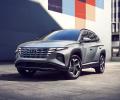
'Some of the launches may get deferred due to the semiconductor shortage, which is unlikely to get resolved before the second half of 2022.'
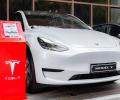
With India's EV penetration at just 2.5 per cent, the market presents an opportunity -- provided Tesla gets its pricing right.

Indian automakers dispatched nearly 2.92 lakh passenger vehicles, the highest ever for February so far, driven by strong demand for cars and utility vehicles, industry body SIAM said on Friday. The total passenger vehicle dispatches from companies to dealers last month increased 11 per cent to 2,91,928 units from 2,62,984 units in February 2022. Passenger car sales rose to 1,42,201 units in February against 1,33,572 units in the year-ago period.
The Hyundai Grand i10 re-writes the rules of the hatchback segment by offering terrific value.
Automakers Maruti Suzuki, Tata Motors, Mahindra & Mahindra and Kia reported robust growth in their vehicle dispatches in the domestic market for August buoyed by festive demand and easing of semiconductor shortage woes. Other manufacturers like Hyundai, Toyota and Skoda also reported growth in wholesales in August as compared with the same month last year. The country's largest automaker Maruti Suzuki India said its domestic passenger vehicle dispatches increased by 30 per cent to 134,166 units in August as compared with 103,187 units in the year-ago month.

The Hyundai Elantra is a well-known name in India, thanks to the striking design language used both the times it was introduced in the country, i.e. in the year 2000 and later in 2012. Now Hyundai has decided to launch the sixth generation car in India to re-capture the D-segment sedan throne. Indian automotive website MotorBeam.com got its hands on the car and decided to run the classy sedan through its paces.
The price of petrol variant of the Verna has been raised by Rs 3,500 (for the base model), while the diesel model has become dearer by Rs 10,000.

In September, JSW MG Motor India, the newly minted joint venture between SAIC Motor, which is present in 100 countries, and Indian conglomerate JSW Group, launched the Windsor, an electric car that introduced battery as a service (BaaS).

Overall, we feel that the Hyundai Elantra is a very good car for people who aren't into aggressive driving but for those who want refinement and comfort along with a long list of features and a pleasant driving experience.

With a slew of new players entering the Indian small car market, segment leaders like Maruti Suzuki India and Hyundai Motor India will face challenge to their domination.
After small cars hogged the limelight, it was the turn of celebrities, including Bollywood stars Shah Rukh Khan, Ajay Devgan and cricketer Sourav Ganguly, to add glitz to the ongoing 10th Auto Expo.

In the US, the Hyundai i30 is marketed as the hatchback version of the Elantra sedan.
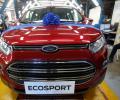
Ford, which had announced to quit the Indian market last year, said it was exploring the possibility of using one of its plants in India to produce electric cars for exports.

If you are planning to buy an electric car in the near future, it would be highly advisable to wait for these upcoming electric SUVs.

Auto Expo 2023 may not trigger a fresh rally in automobile stocks, say analysts, as this year's edition lacks participation from major listed players. It is also owing to the focus on electric vehicles (EVs), a segment where four-wheelers have minuscule market share. "In the passenger vehicles (PV) segment, Maruti Suzuki India and Tata Motors are the only listed players.

Maruti Suzuki is offering cash discounts ranging from Rs 5,000 on its hatchback Celerio to Rs 35,000 on entry level Alto800.
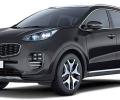
Though both brands belong to the same parent company, Hyundai has issued strict directives to dealer partners to withdraw their applications

Maruti Suzuki India (MSIL) - the market leader in small cars - is eyeing the top spot in the sports utility vehicle (SUV) segment within a year - with a 33 per cent share of the pie. The company has been selling two SUVs - the Brezza and the Grand Vitara - and will start deliveries of the Jimny and the Fronx from March-end, and has set a target of growing its share from the current 11.5 per cent of the SUV market to 33 per cent by the end of 2023-24. The SUV segment is roughly about 42 per cent of the total passenger vehicle market, or around 1.3 million units.

Buying a second-hand car has become hassle-free, courtesy the presence of corporate players like Maruti Suzuki's True Value and Mahindra and Mahindra's First Choice.
At a time when global auto majors are struggling, carmakers in India have been able to expand their overseas presence with exports from the country registering whopping 57.04 per cent growth in the last fiscal.
The share of government banks in auto finance has increased significantly in the last few months. In some cases, it has nearly doubled. The reason: these banks are offering cheaper loans than their private sector counterparts.

The Creta is more sure-footed than previous cars from the Korean firm. Ride quality is good, there is no bouncy feel and the pothole ridden Mumbai roads aren't as bad in the Creta as they are in other cars.
Traditional heavy spenders on cricket properties Vodafone, car maker Hyundai Motors, Reliance Communications and soft drink major Coca-Cola have decided to stay out of the bidding for the sponsorship of the Indian cricket team with the Board of Control for Cricket in India setting a steep base price to Rs 510 crore for a four-year deal for one of cricket's most coveted sponsorships.

22 million vehicles recalled in 2013: US safety agency

Close to 50 models were launched in India in the past 12 months, but companies have not been able to realise their potential due to the pandemic.
It is cheaper than its competitors and comes loaded with much more features.
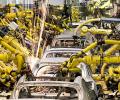
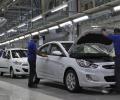
Indian automobile units are employing more and more robots to improve your car's efficiency. India is catching up well as world over, the latest technologies is redefining outdated manufacturing processes.

The Verna will be placed in the upper end of the segment priced between Rs 6.21 lakh and Rs 6.36 lakh for the petrol variant and Rs 7.35 lakh for the diesel variant.
A day after leading car makers Maruti Suzuki and Hyundai Motor decided to cut vehicle prices in the wake of a reduction in taxes, Mahindra Renault on Tuesday said its Logan sedan will be offered at a discount of Rs 60,000.

Consumer sentiments have been dampened due to several factors like tight liquidity, high insurance, and high costs

The top six auto brands are: Maruti Suzuki, Hyundai, Tata Motors, Toyota, Kia and Mahindra & Mahindra.
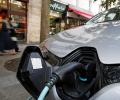
Automobile manufacturers, new and old, as well as ancillary suppliers are set to spend a combined Rs 70,630 crore over the next five years on either entering the electric vehicle segment or stepping up their presence in it. Data culled from announcements made by firms shows India, the world's fifth largest automobile market, is poised to receive one of the biggest capex pushes ever to fuel the transition from internal combustion engines to electric motors and batteries as part of a green drive. The EV push, egged on by the government's emphasis on electric mobility to meet its net zero targets, is expected to yield at least 25 electric vehicles - new ones as well as electrified versions of existing vehicles running on internal combustion engines.
